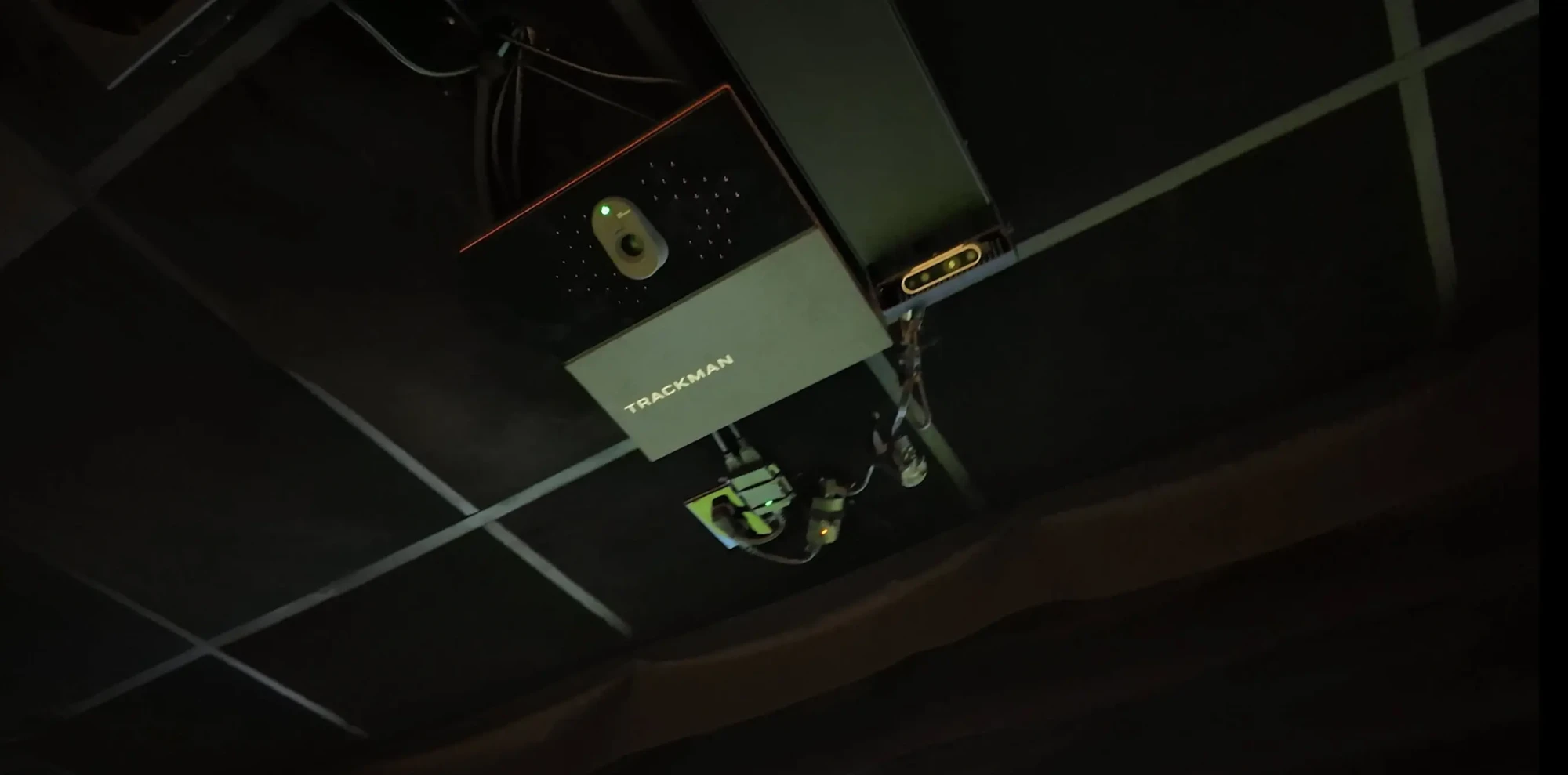
You'll need at least 15 feet wide, 9 feet high, and 18 feet deep for a comfortable TrackMan simulator setup. Your ceiling should be at least 9.4 feet tall, though 10-11 feet works way better if you're over 6'5". Here's the thing about the TrackMan unit itself: it needs 6 to 9.5 feet of space from where you're hitting, while the impact screen requires 8+ feet for proper ball flight tracking. And don't forget that crucial foot of safety space behind the screen! These minimum space requirements will get you started, but let me walk you through some additional factors that'll make your setup even better.
Four key measurements determine whether your room can handle a TrackMan golf simulator, and trust me, getting these dimensions right from the start will save you significant headaches down the road. You'll need at least 15 feet of width for comfortable swings, though you can squeeze by with less if you're willing to restrict your swing or use offset hitting positions (not ideal, but doable).
For ceiling height, you're looking at a minimum of 9 to 9.4 feet, which works fine for most golfers swinging drivers. But here's something important: if you're taller than 6'5", you'll want a ceiling height of 11 feet. Nobody wants to worry about smashing their club into the ceiling during that perfect follow-through!
The depth from your hitting spot to the impact screen should be at least 8 feet 2 inches, although 10-12 feet works much better for accurate ball tracking. Finally, you'll want to position your TrackMan unit 6-7 feet behind the ball which is the sweet spot for the best data collection.
While meeting minimum dimensions gets your TrackMan up and running, stepping up to optimal space requirements transforms your simulator from "it works" to "this is amazing!"
Here's what makes the real difference: bump your ceiling height to 11 feet for TrackMan 4, or 10'6" for TrackMan iO. This extra headroom lets you swing your driver freely without that nagging worry about clipping the ceiling, because let's be honest, nobody swings naturally when they're worried about home repairs. Your room width should hit 15 feet minimum, giving both righties and lefties plenty of elbow room for natural, unrestricted swings.
For depth, you'll want a total of 18 feet to create realistic ball flight. The TrackMan 4 requires 12 feet of space from the hitting area to the screen, plus additional space behind for safety. Remember, radar-based launch monitors (which TrackMan uses to track your shots) need at least 8 feet of clear space around them for accurate shot tracking. Don't forget to plan for mounting space for equipment, proper lighting placement, and clean cable runs that won't trip you up mid-swing.
Now that you've got your space dialed in, let's talk about the star of the show, the TrackMan equipment itself, and where exactly it needs to go. The TrackMan iO is surprisingly compact at just 13.1" x 13.1" x 4.2" and weighs only 8.6 pounds. That's about the size of a large pizza box! Indoor Golf Design will mount it on your ceiling or a drop-down pole behind your hitting area, and here's the key part: it needs to sit 6 to 9.5 feet from where you'll be hitting the ball.
The magic happens through its high-speed cameras, which capture data at up to 4,600 frames per second, allowing you to see every tiny detail of your ball's impact and spin. Built-in infrared lighting means you don't need special room lighting, which is pretty convenient. You'll need an Ethernet connection for data transfer (it handles speeds up to 1,000 Mbps) and a nearby power outlet, though it only draws 17 watts, about the same as an LED light bulb.
Remember, this launch monitor needs a compatible computer to process all that data and deliver the realistic simulation experience you're after. Think of it as the brain that turns all those measurements into the golf course on your screen.